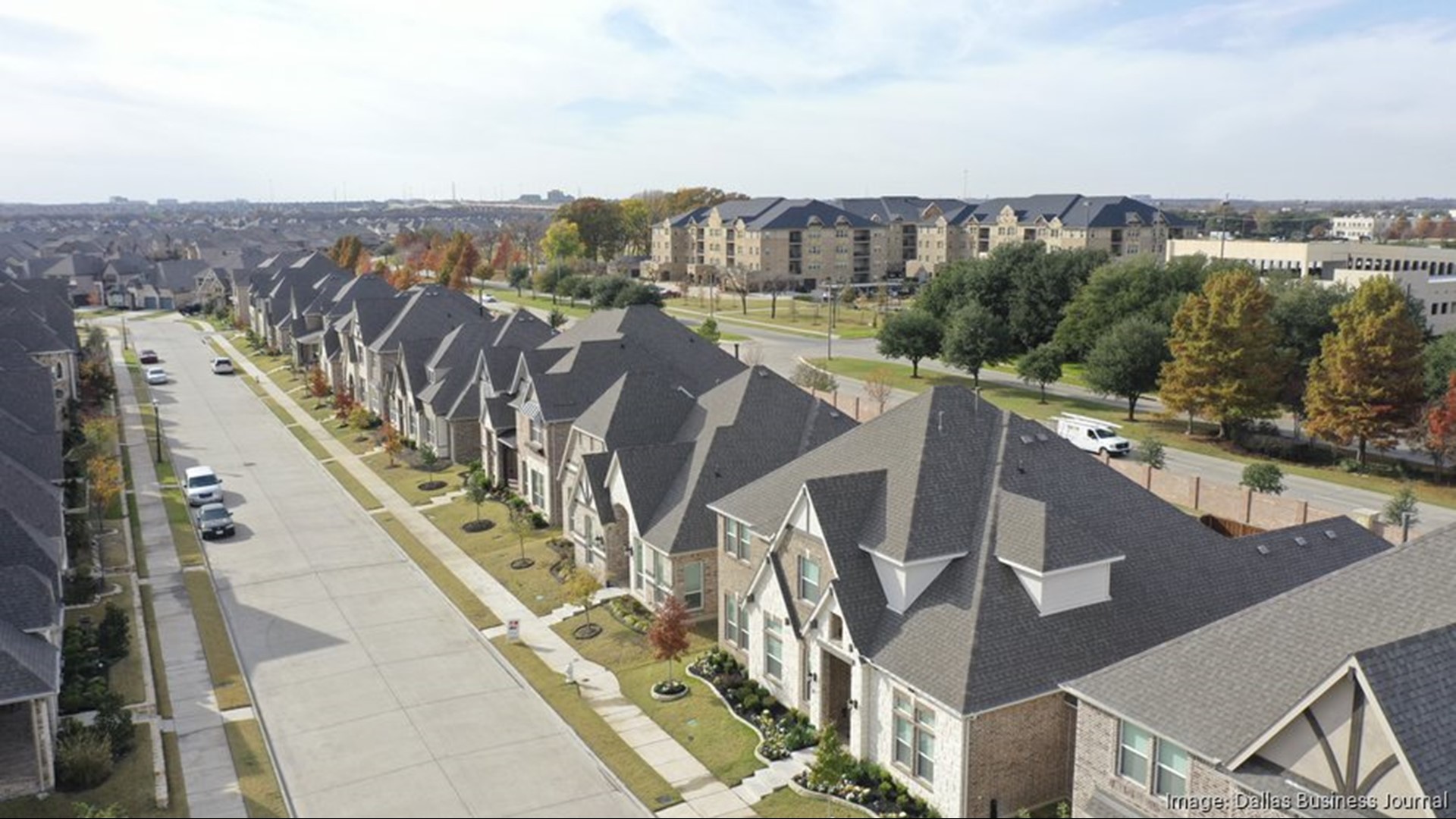
Coppell sits at the DFW Airport corridor's northern edge, and its residential character reflects the expectations of homeowners who have chosen it deliberately — for the school district, for the established neighborhood fabric, and for the quality of the custom-built homes that define its most sought-after sections. The properties here are not large by Cross Timbers standards, but they are cared for with a seriousness that makes the quality of every exterior decision visible. When a Coppell homeowner considers synthetic turf, they are not looking for a cost-cutting measure — they are looking for an upgrade that holds up to the scrutiny of neighbors who take their own landscapes equally seriously.
Artificial Grass of Flower Mound has worked in Coppell's HOA-governed neighborhoods, and we understand the specific dynamics of those communities. Many of Coppell's master-planned sections maintain ARB processes that evaluate landscape modifications on aesthetic grounds — color consistency, blade height relative to adjacent natural grass, and the treatment of transitions at bed edges and hardscape margins. We have navigated those processes successfully and can prepare the documentation that moves a submission through the committee without revision.
A homeowner in Old Coppell — one of the city's original custom-home sections — asked us to address a front lawn situation where a heritage live oak had eliminated the possibility of natural grass under its canopy. The property's HOA did not have a formal ARB process, but the homeowner was appropriately concerned about maintaining consistency with the streetscape. We specified SYNLawn HD in a color register that was deliberately selected against the surrounding maintained Bermuda during late summer, which is when the contrast is sharpest. The result was a front elevation that reads as a considered design decision, not a practical workaround.
In Coppell's newer sections near Bethel Road, where custom builders are still delivering homes on larger lots, we work with the builder and landscape architect from the rough-grade stage to integrate synthetic turf placement with irrigation removal, drainage direction, and retaining structure placement. That coordination produces installations that perform better over time because the site was prepared for them, not retrofitted around them.
Coppell's proximity to the Elm Fork bottom and its mature streetscape trees means that shade-tolerant product selection is a recurring topic. Natural Bermuda fails under sustained canopy; synthetic turf can be specified in a blade weight and color register that reads well in partial shade and maintains its composure through the freeze-thaw cycling that North Texas winters occasionally produce.